Choosing food wrapping paper isn’t just about selecting a material that looks good. The right paper can help preserve freshness, prevent grease from leaking, improve food presentation, and even strengthen your brand. Whether you own a bakery, manage a fast-food restaurant, operate a café, or simply prepare meals at home, understanding how different wrapping papers perform in real situations can help you make smarter packaging decisions.
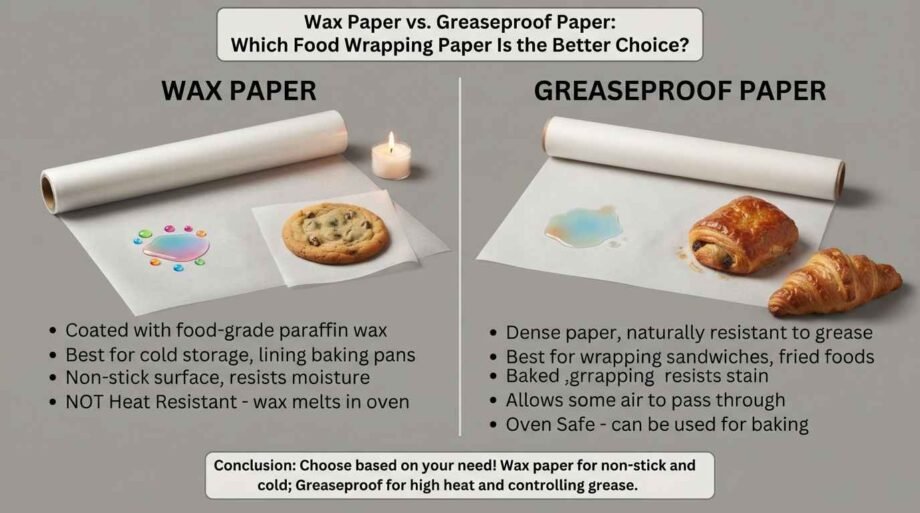
Among the most frequently compared options are wax paper and greaseproof paper. Because both are commonly used to wrap food, many people assume they perform the same function. In reality, they are designed differently and often excel in different applications.
Rather than comparing technical specifications alone, this guide focuses on how each paper performs with the foods people package every day. From burgers and fries to pastries and chocolates, we’ll explore where each material works best and why professionals choose one over the other.
The Biggest Misconception About These Papers
One of the most common mistakes is believing that if two papers stop grease from soaking through, they must be interchangeable.
That assumption often leads businesses to purchase the wrong packaging.
A bakery wrapping buttery croissants has different requirements than a burger restaurant serving hot takeaway meals. Likewise, a chocolatier packaging handmade truffles faces different challenges than a café wrapping breakfast sandwiches.
The best paper depends on the product, the customer experience you want to create, and how the food will be stored or served.
Burger Wrapping: Which Paper Delivers the Better Customer Experience?
Few foods test packaging more than burgers. Freshly grilled patties release grease, heat, and steam at the same time. If the wrapper cannot manage these conditions, customers may end up with soggy packaging or grease-stained hands.
Wax Paper in Action
Wax paper is widely used by burger restaurants because its coated surface helps contain grease while making the wrapper easy to fold around the burger. It also supports vibrant custom printing, allowing businesses to showcase their branding on every order.
For dine-in, takeaway, and quick-service restaurants, wax paper offers a balance between functionality and presentation.
Greaseproof Paper in Action
Greaseproof paper also performs well with burgers, particularly when businesses prefer a natural, matte appearance. Since it is designed to resist oils without a wax coating, it handles greasy foods effectively while giving the packaging a premium artisan look.
Expert Recommendation
If your priority is branding and fast service, wax paper is often the stronger choice.
If your brand focuses on craft burgers or premium food presentation, greaseproof paper can create a more refined appearance.
Which Paper Works Better for French Fries?
French fries create a different packaging challenge. They are hot, oily, and continue releasing steam after serving. The wrapper needs to resist grease while allowing the food to remain appealing.
Wax paper performs well as a basket liner or secondary wrap, especially when combined with trays or serving baskets. It helps keep grease from soaking through while maintaining a clean presentation.
Greaseproof paper is frequently preferred for cone wraps, fry pouches, and takeaway servings because it provides excellent grease resistance without making the package feel overly heavy.
Winner for Fries
For many restaurants, greaseproof paper offers a slight advantage because of its excellent oil resistance and clean, professional appearance.
Packaging Fresh Pastries Without Sacrificing Appearance
Croissants, Danish pastries, muffins, and other baked goods require packaging that protects delicate surfaces while preventing butter and oils from staining the wrapper.
Wax paper creates a smooth barrier that helps prevent sticking, making it suitable for pastries with icing or soft fillings.
Greaseproof paper, on the other hand, is a favorite among artisan bakeries because it combines grease resistance with a natural finish that complements handcrafted products.
Best Choice
For premium bakery presentation, greaseproof paper is often preferred.
For high-volume bakeries producing branded takeaway packaging, custom printed wax paper remains an excellent option.
Cookies, Brownies, and Sweet Treats
Desserts require packaging that protects texture while keeping products visually appealing.
Wax paper works particularly well for:
- Chocolate chip cookies
- Brownies
- Fudge
- Caramel treats
- Soft cookies
Its non-stick surface helps delicate desserts release easily without damaging their appearance.
Greaseproof paper is equally useful for buttery baked goods, especially when businesses want a clean, elegant presentation.
Practical Advice
If appearance and branding are your priority, either paper can perform well, but your choice should align with your brand image and packaging style.
Which Paper Is Better for Sandwiches?
Sandwiches are one of the most common takeaway foods, making this comparison especially important.
Customers expect wrapping that is easy to open, keeps ingredients together, and prevents sauces or oils from transferring to their hands.
Wax paper has long been a preferred choice because it is lightweight, easy to fold, and provides reliable grease resistance for most sandwiches.
Greaseproof paper performs equally well for artisan sandwiches, especially in cafés that emphasize sustainability and premium presentation.
Recommendation
- Fast-food chains: Wax paper
- Independent cafés: Greaseproof paper
- Premium sandwich shops: Either, depending on branding goals
Wax Paper vs. Greaseproof Paper: Which One Performs Better for Different Food Products?
By now, it’s clear that wax paper and greaseproof paper aren’t competing products—they’re packaging solutions designed for different situations. The real decision isn’t about which material is technically superior; it’s about choosing the paper that supports your food, your workflow, and the experience you want customers to have.
Let’s move beyond burgers and pastries and explore how these papers perform across a wider range of food applications.
Chocolate Packaging: Protecting Appearance Matters More Than You Think
Chocolate is one of the most delicate food products to package. A wrapper that sticks to the surface or allows grease marks to show can reduce the premium feel of the product before it’s even tasted.
Why Wax Paper Is Popular for Chocolate
Wax paper’s smooth surface helps prevent chocolate from sticking, making it ideal for:
- Chocolate bars
- Handmade truffles
- Fudge
- Caramel squares
- Chocolate-covered strawberries
It also gives businesses the opportunity to print elegant branding directly onto the wrapper, creating a more memorable unboxing experience.
Where Greaseproof Paper Fits
Greaseproof paper is commonly used by artisan chocolatiers who prefer a soft, matte finish that complements handcrafted products. While it handles cocoa butter well, the choice often comes down to presentation rather than performance.
Packaging Expert’s Pick
- Luxury handmade chocolates: Greaseproof Paper
- Branded chocolate bars: Custom Wax Paper
Cheese Wrapping: Freshness Is Only Half the Story
Cheese continues to release moisture and oils after packaging. The wrong wrapping material can affect texture, appearance, and handling.
Wax paper has traditionally been used for short-term cheese wrapping because it helps control surface grease while making individual portions easy to handle.
For specialty cheese shops, greaseproof paper is often selected because it creates a clean presentation that aligns with premium retail displays.
Best Choice by Business
| Business | Recommended Paper |
| Grocery Store | Wax Paper |
| Artisan Cheese Shop | Greaseproof Paper |
| Deli Counter | Wax Paper |
| Farmers’ Market | Greaseproof Paper |
The decision is often influenced by branding as much as by product protection.
Wrapping Fresh Deli Meats
Freshly sliced meats present a unique challenge. They contain moisture, natural fats, and are often handled frequently during serving.
Wax paper is widely used for separating slices and wrapping smaller portions because it folds easily and prevents excessive sticking.
Greaseproof paper performs well when presenting premium cured meats or specialty products where appearance is an important part of the buying experience.
Recommendation
For high-volume deli operations, wax paper usually provides better speed and efficiency. For gourmet food retailers, greaseproof paper often complements the premium image of the brand.
Which Paper Is Better for Bakery Displays?
Presentation is one of the biggest selling factors in any bakery.
Customers often decide what to buy based on appearance before they even read a label.
Wax Paper in Display Cases
Wax paper works well beneath cookies, brownies, muffins, and pastries because it creates a clean, grease-resistant barrier while supporting colorful custom printing.
Greaseproof Paper in Artisan Bakeries
Many premium bakeries prefer greaseproof paper because its natural finish complements handcrafted breads, croissants, and pastries without distracting from the product itself.
Which Creates the Better Display?
If your bakery emphasizes modern branding and vibrant packaging, wax paper offers greater flexibility.
If your focus is rustic presentation and handcrafted quality, greaseproof paper often reinforces that message.
Coffee Shops: Speed Meets Presentation
Busy cafés package hundreds of food items every day. Every second counts during the morning rush, and packaging must be both functional and attractive.
Wax paper is often the preferred solution because employees can wrap sandwiches, pastries, and cookies quickly while maintaining a consistent branded appearance.
Greaseproof paper appeals to independent cafés looking for a minimalist, premium aesthetic.
Neither choice is wrong—it depends on the customer experience you want to create.
Which Paper Supports Better Branding?
Packaging is no longer just protection—it has become a marketing tool.
Every wrapped sandwich, cookie, or pastry leaving your store represents an opportunity to strengthen brand recognition.
Why Businesses Choose Custom Wax Paper
Custom wax paper allows companies to print:
- Company logos
- Brand colors
- Promotional graphics
- Seasonal artwork
- QR codes
- Social media handles
Because customers interact directly with the wrapper while eating, branded packaging can leave a lasting impression.
Greaseproof Paper for Premium Identity
Greaseproof paper is also printable, but many businesses intentionally keep the design simple to match an artisan or eco-conscious brand image.
The right choice depends on whether your goal is bold brand visibility or understated elegance.
Food Trucks vs. Fine Dining Restaurants
The packaging needs of these businesses are completely different.
Food Trucks
Food trucks require packaging that is:
- Quick to use
- Lightweight
- Affordable
- Easy to store
- Suitable for takeaway
Wax paper checks all of these boxes, making it a common choice for wraps, burgers, tacos, and sandwiches.
Fine Dining Restaurants
Restaurants offering premium takeaway meals often focus on presentation as much as practicality.
Greaseproof paper, particularly in neutral colors with subtle branding, helps create a sophisticated appearance that matches the overall dining experience.
Which Paper Is More Sustainable?
Sustainability has become an important purchasing factor for both businesses and consumers.
Rather than asking whether one paper is environmentally friendly, consider the following:
- Is the paper responsibly sourced?
- Are food-safe inks used for printing?
- Does the supplier offer recyclable or compostable options where appropriate?
- Is unnecessary packaging being avoided?
Many manufacturers now produce both wax paper and greaseproof paper using responsibly sourced materials. The environmental impact depends on the specific product and local waste management facilities rather than the name of the paper alone.
For businesses, choosing the right size and avoiding over-packaging can have just as much impact as the material itself.
Matching the Paper to Your Business
Instead of asking which paper is “best,” think about your daily operation.
If your business serves hundreds of takeaway meals each day, speed, branding, and grease resistance are likely your priorities.
If your products are handcrafted, displayed in premium retail environments, or marketed as artisan goods, presentation may become the deciding factor.
The most successful food businesses don’t choose packaging based on trends—they choose it based on how it supports their products, customers, and brand.
Finding the Right Fit: It’s About the Food, Not Just the Paper
After exploring how wax paper and greaseproof paper perform across different food applications, one thing becomes obvious: there isn’t a single winner. The better option depends on what you’re packaging, how the food will be be served, and what kind of experience you want customers to have.
A bakery selling buttery croissants has different packaging priorities than a burger restaurant preparing takeaway meals. Likewise, a gourmet chocolate brand values presentation differently from a food truck focused on speed and efficiency.
Rather than asking, “Which paper should everyone use?”, ask, “Which paper best supports my product?” That small shift in thinking leads to better packaging decisions, lower costs, and a more consistent customer experience.
A Buyer’s Checklist Before Choosing Food Wrapping Paper
Before placing an order, evaluate your packaging needs using these practical questions.
1. What Type of Food Are You Packaging?
Different foods behave differently once they’re wrapped.
- Oily foods need strong grease resistance.
- Delicate pastries require a smooth surface that won’t damage the product.
- Chocolates benefit from wrappers that protect appearance.
- Sandwiches need packaging that’s easy to open and comfortable to hold.
The product itself should always influence the paper you choose.
2. Will the Food Be Served Immediately?
If customers will enjoy the food within minutes or hours, wax paper often provides everything you need.
If products spend more time in display cases or premium retail environments, greaseproof paper may enhance presentation while maintaining excellent grease resistance.
3. Does Branding Matter?
Many businesses overlook one important fact:
Your wrapper is often the first thing customers touch.
Custom printed packaging creates brand recognition every time someone unwraps a burger, pastry, cookie, or sandwich.
If building brand awareness is a priority, choose a material that supports high-quality printing while complementing your visual identity.
4. How Busy Is Your Operation?
A café serving 300 customers every morning needs packaging that’s fast and easy to use.
An artisan bakery packaging handcrafted desserts may accept a slower wrapping process in exchange for a premium presentation.
Operational efficiency should always be part of your packaging decision.
Which Paper Matches Your Business?
Every food business has different priorities. The table below provides quick recommendations based on common commercial applications.
| Business Type | Best Option | Why It Works |
| Burger Restaurant | Wax Paper | Easy wrapping, grease resistance, branding opportunities |
| Sandwich Shop | Wax Paper | Lightweight and efficient for takeaway service |
| Bakery | Depends on the product | Wax paper for branded packaging, greaseproof paper for artisan presentation |
| Coffee Shop | Wax Paper | Fast service with attractive printed designs |
| Food Truck | Wax Paper | Cost-effective and practical for high-volume orders |
| Donut Shop | Greaseproof Paper | Handles oily baked goods while maintaining a clean appearance |
| Chocolate Brand | Both | Depends on product style and brand identity |
| Deli | Wax Paper | Quick wrapping for fresh food |
| Gourmet Food Store | Greaseproof Paper | Premium look for specialty products |
Cost Isn’t Everything—Value Is
Many buyers compare packaging by looking only at the price per sheet. While cost is important, the least expensive option isn’t always the most economical.
Imagine a café that saves a few cents on every wrapper but ends up with grease leaking through the paper. The immediate savings could be outweighed by customer dissatisfaction and additional packaging waste.
Now imagine a bakery purchasing premium greaseproof paper for products that don’t require it. The extra cost may never translate into additional value for customers.
The best packaging investment is the one that meets your product’s needs without paying for features you don’t use.
Common Mistakes Businesses Make
Even experienced food businesses sometimes choose packaging based on assumptions instead of actual performance.
Using One Paper for Every Product
Different menu items often require different packaging solutions. A single paper rarely performs perfectly across every food category.
Ignoring Customer Experience
Customers remember how food feels in their hands.
A clean wrapper, easy opening, and attractive presentation all contribute to a positive impression of your brand.
Choosing Appearance Over Function
A wrapper may look premium, but if it doesn’t perform well with the food inside, appearance quickly becomes less important.
Good packaging balances aesthetics with functionality.
Overlooking Custom Printing
Many businesses miss an opportunity to promote their brand simply because they treat packaging as a necessity rather than a marketing tool.
Every wrapped product leaving your store is free advertising.
Frequently Asked Questions
Is wax paper better than greaseproof paper?
Neither is universally better. Wax paper is often preferred for burgers, sandwiches, cookies, and branded food wrapping, while greaseproof paper is widely used for pastries, baked goods, and artisan food presentation.
Which paper do bakeries use?
Many bakeries use both materials. Wax paper is popular for branded takeaway packaging, while greaseproof paper is commonly used to present buttery pastries, croissants, and premium baked goods.
Can restaurants print their logo on both papers?
Yes. Both wax paper and greaseproof paper can be custom printed with food-safe inks. The choice usually depends on the desired finish and brand image.
Which paper is better for oily foods?
Both papers provide excellent grease resistance, but the ideal choice depends on the food. Wax paper is widely used for burgers and sandwiches, while greaseproof paper is frequently chosen for pastries and fried snacks.
Which paper creates a more premium appearance?
Greaseproof paper often has a natural, matte finish that complements artisan brands. Wax paper, especially when custom printed, creates a bold and recognizable branded presentation.
Quick Decision Matrix
Still unsure? Use this guide to choose the right paper in seconds.
| If You’re Packaging… | Recommended Paper |
| Burgers | Wax Paper |
| Sandwiches | Wax Paper |
| Wraps | Wax Paper |
| Cookies | Wax Paper |
| Brownies | Wax Paper |
| Chocolates | Wax Paper or Greaseproof Paper |
| Croissants | Greaseproof Paper |
| Danish Pastries | Greaseproof Paper |
| Muffins | Greaseproof Paper |
| Donuts | Greaseproof Paper |
| Fried Snacks | Greaseproof Paper |
| Food Basket Liners | Wax Paper |
| Artisan Bakery Products | Greaseproof Paper |
| Custom Branded Takeaway Food | Wax Paper |
What Packaging Professionals Recommend
Businesses that achieve consistent packaging results rarely rely on a single material for every application.
Instead, they build their packaging strategy around the products they sell.
A restaurant may use custom wax paper for burgers and sandwiches while switching to greaseproof paper for pastries or baked desserts.
A bakery may use greaseproof paper for display cases but choose custom printed wax paper for takeaway orders to reinforce brand recognition.
Selecting packaging this way improves efficiency, reduces waste, and creates a more professional customer experience.
Final Thoughts
Wax paper and greaseproof paper both play an important role in modern food packaging, but they are designed with different priorities in mind. Wax paper is valued for its smooth surface, reliable grease resistance, and ability to showcase custom branding, making it a practical choice for restaurants, cafés, food trucks, and takeaway businesses. Greaseproof paper, with its clean finish and excellent performance around oily baked goods, is often preferred by artisan bakeries, gourmet food retailers, and premium food brands.
Rather than viewing these materials as competitors, think of them as complementary tools. Choosing the right one depends on the food you serve, the experience you want to create, and the image you want your packaging to communicate. When packaging decisions are based on real applications instead of assumptions, businesses can protect product quality, improve customer satisfaction, and make every order look as good as it tastes.
