When choosing packaging materials for meat products, many people focus only on appearance. However, professional food businesses understand that wrapping material can influence much more than presentation.
The right paper can affect:
- How meat is handled
- How moisture is controlled
- How products are displayed
- How customers perceive quality
- How efficiently employees package orders
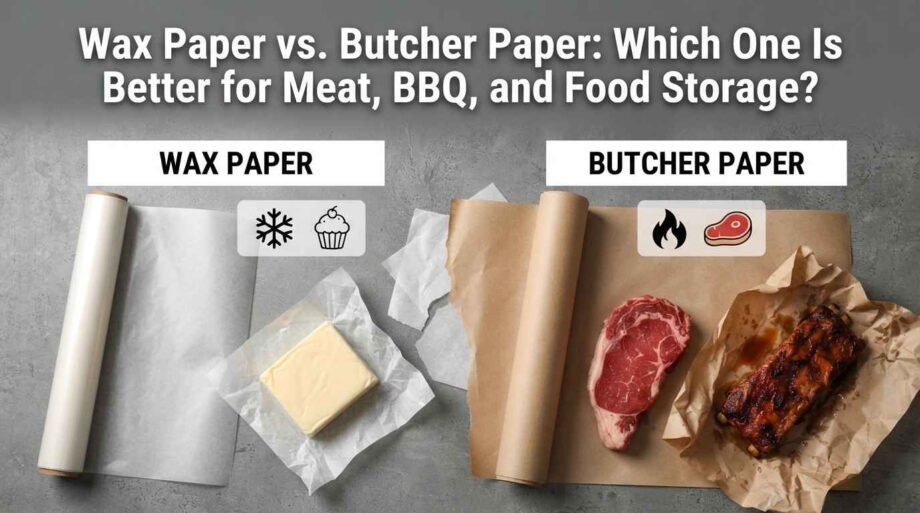
Wax paper and butcher paper are two materials commonly associated with food handling, but they serve very different purposes.
Wax paper is designed around creating a smooth protective surface, while butcher paper is designed around strength, breathability, and meat handling performance.
A butcher wrapping fresh cuts for a customer, a BBQ restaurant preparing smoked brisket, and a deli preparing sliced meat products all have different packaging challenges. Choosing the wrong paper can create problems such as excess moisture, poor presentation, or inefficient handling.
Understanding the difference between these papers helps businesses select packaging that matches their specific needs.
Why Meat Packaging Requires Different Thinking
Meat is not like ordinary dry food products.
Fresh and cooked meats naturally interact with their environment. They release moisture, oils, and juices that can affect packaging performance.
A wrapping material must balance several factors:
- Protection
- Air movement
- Clean handling
- Product appearance
- Storage requirements
For example, a fresh steak displayed in a butcher counter needs packaging that supports a professional presentation.
A smoked brisket requires packaging that helps maintain texture after hours of cooking.
A deli preparing sliced meats needs a wrapper that allows fast portion handling.
These situations may involve the same food category, but the packaging requirements are completely different.
This is why professional businesses do not simply ask:
“Which paper is better?”
They ask:
“Which paper works best for this specific meat application?”
Understanding Wax Paper: A Protective Barrier for Food Handling
Wax paper is created by applying a wax coating to a paper base. This coating gives the paper a smooth surface that helps reduce sticking and provides resistance against moisture and grease.
The wax layer creates several useful characteristics:
- Smooth texture
- Easy folding
- Reduced food sticking
- Grease resistance
- Clean appearance
Because of these qualities, wax paper is widely used in food preparation and packaging environments.
It performs especially well when the goal is to create separation between food items or protect surfaces from oils and moisture.
Where Wax Paper Works Well in Meat Applications
Although wax paper is not traditionally considered a primary butcher wrapping material, it has several useful applications in meat-related businesses.
Separating Meat Portions
One common use is separating individual portions.
Examples include:
- Burger patties
- Sliced meats
- Prepared portions
- Frozen food items
The smooth surface helps prevent pieces from sticking together.
For businesses preparing large quantities of products, this can improve organization and speed during packaging.
Deli Counter Applications
Delis often need packaging that allows employees to quickly handle sliced products.
Wax paper can work well for:
- Cold cuts
- Cheese and meat combinations
- Ready-to-eat portions
- Sandwich preparation
The material helps create a clean barrier between food and external surfaces.
For customers, this creates a more convenient opening experience.
Food Tray Liners and Presentation
Wax paper is also used as a liner in food presentation.
Applications include:
- Meat baskets
- Serving trays
- Takeaway containers
The smooth surface helps collect grease while maintaining a cleaner serving area.
Restaurants often choose printed wax paper because it can combine functionality with branding.
Understanding Butcher Paper: Designed Around Meat Handling
Butcher paper has a long history connected with meat preparation and professional food service.
Unlike wax paper, butcher paper is not mainly designed to create a coated barrier. Instead, it focuses on:
- Strength
- Durability
- Handling performance
- Breathability
Traditional butcher paper allows controlled airflow, which makes it especially valuable for meat products.
This characteristic separates butcher paper from many coated wrapping materials.
Why Butcher Paper Became Popular in Meat Businesses
Before modern packaging systems existed, butchers needed a material that could protect meat while still allowing practical handling.
The paper needed to:
- Wrap different shapes easily
- Resist tearing
- Support transportation
- Maintain product appearance
Butcher paper became popular because it offered a balance between protection and flexibility.
Today, it remains common in:
- Butcher shops
- BBQ restaurants
- Meat markets
- Specialty food stores
BBQ Smoking: The Biggest Difference Between These Papers
One of the most important differences appears in BBQ applications.
Smoking meat is not simply cooking—it is a long process where temperature, moisture, and airflow all influence the final product.
During smoking, meat develops:
- A flavorful outer bark
- Tender internal texture
- Smoke absorption
- Natural juices
The wrapping material can influence these results.
Why BBQ Professionals Choose Butcher Paper
Many BBQ professionals prefer butcher paper because it allows the meat to continue breathing while providing protection.
This balance helps maintain:
- Bark texture
- Moisture control
- Heat retention
For products like:
- Brisket
- Pulled pork
- Smoked beef
- Large cuts of meat
butcher paper provides a practical solution during long cooking processes.
It protects the meat without creating a completely sealed environment.
Why Wax Paper Is Not Suitable for BBQ Smoking
Wax paper is designed around surface protection, not smoking performance.
The wax coating creates a barrier that can interfere with the airflow needed during smoking.
It is also not intended for direct exposure to cooking environments.
For BBQ applications, professionals usually choose materials designed specifically for heat and meat handling.
Pink Butcher Paper vs Traditional Butcher Paper
When discussing butcher paper, many people are referring specifically to pink butcher paper.
Pink butcher paper has become especially popular in BBQ because it provides a recognizable professional appearance while supporting smoking techniques.
It is commonly associated with:
- BBQ competitions
- Smokehouses
- Premium barbecue restaurants
Traditional butcher paper may serve more general wrapping purposes, while pink butcher paper has gained popularity among smoking professionals.
Fresh Meat Packaging: Which Paper Creates Better Results?
Fresh meat packaging has different goals compared with BBQ.
The main priorities are:
- Clean appearance
- Product protection
- Customer confidence
- Easy handling
Butcher Paper for Fresh Meat Counters
Butcher paper remains a popular choice because it provides the traditional appearance customers associate with quality meat.
A professionally wrapped package can communicate:
- Freshness
- Expertise
- Trust
This is especially important in local butcher shops where presentation influences purchasing decisions.
Wax Paper for Short-Term Meat Handling
Wax paper can be useful when meat needs temporary protection.
Examples:
- Separating portions
- Preparing orders
- Creating layers between products
However, businesses should choose it based on the specific purpose rather than replacing butcher paper completely.
Moisture Control: The Core Difference
The biggest functional difference between wax paper and butcher paper is moisture management.
Wax Paper
Wax paper creates a more protective barrier.
It is useful when businesses want:
- Less grease transfer
- Cleaner handling
- Product separation
Butcher Paper
Butcher paper provides a more breathable environment.
It is useful when businesses want:
- Controlled airflow
- Traditional meat wrapping
- Better support for smoked products
Meat Display and Customer Experience
Packaging is also part of customer perception.
When customers purchase meat, they often judge quality through:
- Appearance
- Clean wrapping
- Professional presentation
A well-wrapped product creates confidence before the customer even prepares the food.
Butcher paper often has an advantage here because it has a strong association with traditional meat markets and professional butchers.
Wax paper can create a cleaner modern appearance, especially when combined with custom printing.
Choosing Paper Based on Your Business Model
Different businesses should approach the decision differently.
BBQ Restaurants
Primary needs:
- Smoking performance
- Moisture balance
- Meat quality
Recommended:
Butcher Paper
Traditional Butcher Shops
Primary needs:
- Fresh meat presentation
- Strong wrapping
- Customer trust
Recommended:
Butcher Paper
Deli Businesses
Primary needs:
- Fast preparation
- Portion handling
- Clean packaging
Recommended:
Wax Paper or Butcher Paper
Food Brands
Primary needs:
- Brand presentation
- Customer experience
- Product protection
Recommended:
Custom Wax Paper or Specialized Butcher Paper
Common Mistakes When Selecting Meat Wrapping Paper
Choosing Based Only on Appearance
Two papers may look similar but perform differently.
A material should be selected based on application, not just visual appeal.
Using Coated Paper for Applications Requiring Airflow
Some meat products perform better when they can breathe.
A sealed environment may not always provide the desired result.
Ignoring Customer Experience
Packaging is part of the product.
Poor wrapping can affect how customers view quality.
Buying Without Considering Workflow
Businesses should consider:
- How employees package products
- How customers transport food
- How long products remain wrapped
- Storage conditions
The best packaging supports the entire process.
Wax paper and butcher paper are both valuable food packaging materials, but they solve different problems.
Wax paper is strongest when businesses need:
- Smooth protection
- Food separation
- Grease resistance
- Customer-facing wrapping
Butcher paper is strongest when businesses need:
- Meat handling performance
- Breathability
- Strong wrapping
- BBQ and butcher applications
The right choice depends on whether the priority is creating a protective barrier or maintaining a breathable meat-wrapping environment.
In the next part, we will continue with deeper commercial comparisons:
- Wax paper vs butcher paper for brisket, ribs, and smoked meats
- Which paper keeps meat fresh longer
- Restaurant and catering applications
- Custom printing opportunities
- Cost and bulk purchasing considerations
- Professional buying guide for different industries
I will keep the next section focused only on meat, BBQ, and food storage applications without repeating previous wax paper topics.
Wax Paper vs. Butcher Paper: Which One Is Better for Meat, BBQ, and Food Storage?
The choice between wax paper and butcher paper becomes more important when businesses move from simple wrapping to professional food handling. A home user may only need paper for temporary protection, but restaurants, butcher shops, BBQ businesses, and food manufacturers must consider product quality, workflow, customer expectations, and storage conditions.
Meat packaging is not only about keeping a product covered. It is about maintaining the right balance between protection and performance.
A good wrapping material should help businesses:
- Maintain product quality
- Improve handling speed
- Create professional presentation
- Reduce packaging issues
- Deliver a better customer experience
In this section, we will look deeper into real commercial situations where the difference between wax paper and butcher paper becomes clear.
Brisket Wrapping: Why Butcher Paper Is the Preferred Choice
Brisket is one of the most challenging meats to package because the cooking process can last many hours.
During smoking, brisket develops:
- A flavorful outer bark
- Rendered fat
- Internal moisture
- A tender texture
The wrapping material must protect the meat without completely changing the environment around it.
This is why many BBQ professionals choose butcher paper.
How Butcher Paper Supports Brisket Quality
Butcher paper provides a balance between protection and airflow.
It helps:
- Maintain the outer bark
- Reduce excessive moisture loss
- Hold heat during resting
- Protect the meat during transportation
The paper does not create the same sealed environment as some other wrapping materials, allowing the brisket to maintain characteristics that BBQ customers expect.
Why Wax Paper Is Not Used for Brisket Smoking
Wax paper creates a coated barrier, which is useful for many food applications but not ideal for smoking.
The purpose of brisket wrapping is not simply preventing moisture movement. It is controlling the relationship between moisture, heat, and airflow.
For this reason, BBQ professionals usually choose butcher paper specifically designed for smoked meats.
Ribs and Pulled Pork: Choosing Based on Cooking Method
Different BBQ products have different requirements.
Ribs, pulled pork, and smoked beef products each respond differently to wrapping methods.
Ribs
Ribs require careful moisture management because excessive moisture can affect texture and bark development.
Butcher paper is often selected because it provides protection while allowing controlled airflow.
Pulled Pork
Large pork cuts require long cooking times, making wrapping material important.
Butcher paper can help protect the product while maintaining the desired texture.
Ready-to-Eat BBQ Packaging
After cooking is complete, packaging requirements change.
Restaurants selling:
- BBQ sandwiches
- Pulled pork meals
- Smoked meat portions
may choose materials based on customer handling rather than cooking performance.
At this stage, wax paper can become useful because it provides:
- Easy wrapping
- Clean presentation
- Grease resistance
- Branding opportunities
Restaurant Packaging: Cooking Material vs Serving Material
One of the biggest mistakes businesses make is using the same packaging solution for every stage.
Professional operations often separate:
Production packaging
from
Customer packaging
These two purposes require different properties.
During Meat Preparation
Businesses need:
- Strength
- Handling ability
- Temperature suitability
Butcher paper often performs well in this area.
During Customer Service
Businesses need:
- Attractive presentation
- Easy opening
- Clean handling
- Brand visibility
Wax paper can provide advantages here.
Catering Businesses: Balancing Protection and Presentation
Catering companies face unique packaging challenges.
Food may need to:
- Travel long distances
- Stay presentable
- Be served later
- Handle transportation pressure
The right paper depends on the food stage.
For example:
A catering company transporting smoked meats may prefer butcher paper for maintaining product quality.
The same company may use custom wax paper for serving trays and customer presentation.
Grocery Stores and Meat Markets
Large retail environments require packaging that supports speed and consistency.
Employees may package hundreds of orders daily.
Important factors include:
- Fast wrapping
- Reliable handling
- Clean appearance
- Customer trust
Why Butcher Paper Remains Popular in Meat Counters
Butcher paper has a traditional connection with fresh meat sales.
Customers often associate it with:
- Fresh cuts
- Skilled preparation
- Quality products
This perception can influence buying decisions.
A professionally wrapped package creates a stronger connection between the customer and the product.
Wax Paper in Modern Food Retail
Modern food businesses often focus heavily on branding.
Custom wax paper allows companies to create packaging that includes:
- Logos
- Brand patterns
- Marketing messages
- Seasonal designs
This makes wax paper valuable for businesses that want packaging to become part of their customer experience.
Storage Considerations: Short-Term vs Extended Holding
Storage requirements are another important factor.
The right paper depends on:
- Storage duration
- Product condition
- Temperature
- Handling frequency
Short-Term Meat Handling
For short-term applications, businesses often prioritize:
- Easy handling
- Clean separation
- Quick packaging
Wax paper can be useful for these situations.
Examples:
- Portion separation
- Prepared orders
- Food preparation stages
Fresh Meat Wrapping
Fresh meat businesses often prefer butcher paper because it is designed specifically around meat handling.
It provides:
- Strength
- Traditional presentation
- Practical wrapping ability
Frozen Product Considerations
Frozen products create different packaging requirements.
Businesses must consider:
- Moisture exposure
- Freezer conditions
- Storage duration
The best packaging choice depends on the complete packaging system, including additional layers or protective materials.
Paper selection should always match the product journey.
Custom Printing: Turning Meat Packaging Into Branding
Packaging has become a major marketing tool for food businesses.
Customers interact with packaging before they taste the product.
A simple wrapper can communicate:
- Brand quality
- Professionalism
- Product identity
Custom Wax Paper for Food Brands
Wax paper is commonly selected by brands that want visible packaging.
Applications include:
- BBQ sandwiches
- Deli products
- Restaurant orders
- Food baskets
Printed designs can help businesses create a recognizable customer experience.
Custom Butcher Paper for Premium Meat Brands
Butcher paper can also support branding.
Businesses may use customized butcher-style wrapping for:
- Specialty meat shops
- BBQ restaurants
- Premium food retailers
A branded paper wrap can reinforce a handcrafted, professional image.
Cost Comparison: Which Paper Provides Better Business Value?
Cost is important, but businesses should evaluate value rather than only price.
A cheaper paper that creates product problems may increase total expenses.
Wax Paper Cost Advantages
Wax paper can provide value through:
- Easy handling
- Fast packaging
- Branding opportunities
- Flexible applications
For businesses serving prepared foods, these benefits can improve efficiency.
Butcher Paper Cost Advantages
Butcher paper provides value through:
- Strong wrapping ability
- Meat-specific performance
- Professional presentation
- Reliable handling
For meat-focused businesses, the performance benefits often justify the investment.
Strength and Durability Comparison
Packaging strength matters because meat products can be heavy, moist, and difficult to handle.
Wax Paper
Strengths:
- Flexible
- Easy to fold
- Smooth handling
Limitations:
- Not designed for heavy-duty meat wrapping
- Coating limits certain applications
Butcher Paper
Strengths:
- Durable
- Strong structure
- Suitable for larger cuts
Limitations:
- Less focused on creating a moisture barrier
Which Paper Should Different Businesses Choose?
| Business Type | Recommended Paper | Main Reason |
| BBQ Restaurant | Butcher Paper | Supports smoking process |
| Butcher Shop | Butcher Paper | Professional meat wrapping |
| Deli Counter | Wax Paper / Butcher Paper | Depends on product handling |
| Food Truck | Wax Paper | Easy customer packaging |
| Premium Meat Brand | Custom Butcher Paper | Professional presentation |
| Prepared Food Brand | Custom Wax Paper | Branding and convenience |
Wax paper and butcher paper are not direct replacements for each other.
They serve different roles in the food industry.
Butcher paper is the stronger choice when the goal is:
- Meat handling
- BBQ smoking
- Fresh meat wrapping
- Professional butcher presentation
Wax paper is the stronger choice when the goal is:
- Food separation
- Prepared food packaging
- Customer-facing presentation
- Brand visibility
The most successful food businesses understand that packaging should match the product journey.
Wax Paper vs. Butcher Paper: Final Buying Guide, Decision Chart, FAQs, and Expert Recommendations
After comparing wax paper and butcher paper through meat handling, BBQ applications, storage needs, restaurant operations, and branding opportunities, the main conclusion is clear:
Neither paper is universally better. Each material is designed for a different purpose.
A successful food business does not choose packaging based only on price or appearance. It chooses based on how the material performs throughout the product journey.
A BBQ restaurant has different needs from a butcher shop.
A deli has different needs from a meat manufacturer.
A food brand selling ready-to-eat products has different priorities from a traditional meat counter.
The correct choice comes from understanding the role of the paper.
A Simple Way to Choose Between Wax Paper and Butcher Paper
Before purchasing packaging, businesses should answer three important questions:
Is the product being cooked, stored, or served?
The stage of the product determines the paper requirement.
Cooking and Smoking
Best Choice:
Butcher Paper
Reason:
- Supports airflow
- Handles BBQ applications
- Protects meat during long processes
Serving and Customer Packaging
Best Choice:
Wax Paper
Reason:
- Easy handling
- Clean presentation
- Branding opportunities
Does the product need a barrier or breathability?
This is the biggest difference between the two materials.
Need More Protection From Grease and Contact?
Choose:
Wax Paper
Useful for:
- Portion separation
- Prepared foods
- Food liners
Need Controlled Air Movement?
Choose:
Butcher Paper
Useful for:
- Smoked meats
- Fresh meat wrapping
- BBQ applications
Is Packaging Part of Your Brand Experience?
Modern food businesses understand that packaging is not only functional.
It also communicates:
- Quality
- Professionalism
- Brand identity
A customer may interact with the wrapper before tasting the product.
This makes packaging an important part of the overall experience.
Final Comparison: Wax Paper vs. Butcher Paper
| Category | Wax Paper | Butcher Paper |
| Main Purpose | Food protection and wrapping | Meat handling and wrapping |
| Surface | Smooth coated surface | Strong paper structure |
| Moisture Control | Creates a stronger barrier | Allows controlled airflow |
| BBQ Use | Limited | Excellent |
| Fresh Meat Wrapping | Limited applications | Excellent |
| Food Separation | Excellent | Good |
| Customer Packaging | Excellent | Good |
| Heavy Meat Cuts | Less suitable | More suitable |
| Branding | Excellent | Good |
| Restaurant Use | Strong for prepared foods | Strong for meat-focused businesses |
Sustainability: Which Paper Is the Better Choice?
Sustainable packaging decisions are becoming more important for food businesses.
However, choosing an environmentally responsible option requires looking beyond the material name.
Businesses should consider:
- Responsible paper sourcing
- Printing methods
- Coating materials
- Waste reduction
- Supplier practices
The most sustainable packaging is often the material that performs correctly and prevents unnecessary waste.
Using unsuitable packaging can lead to:
- Damaged products
- Additional replacement packaging
- Poor customer experience
A well-selected material can improve efficiency and reduce unnecessary consumption.
Common Packaging Mistakes Businesses Should Avoid
Choosing One Paper for Every Application
A common mistake is assuming one wrapping material can handle every food requirement.
A BBQ restaurant, deli, and butcher shop may all sell meat, but their packaging needs are different.
Ignoring the Product Stage
Businesses should consider where packaging is used:
- Before cooking
- During cooking
- After cooking
- During transportation
- During customer service
The same paper may not perform equally well at every stage.
Selecting Packaging Only Based on Price
Lower initial cost does not always mean better value.
Poor packaging performance can create:
- Product waste
- Customer complaints
- Additional labor
- Brand damage
The better approach is choosing packaging that supports business goals.
Forgetting Customer Experience
Packaging affects how customers perceive food quality.
A clean, professional package can create confidence.
A poor wrapper can make even a high-quality product appear less valuable.
Recommendations by Industry
BBQ Restaurants
Best Choice:
Butcher Paper
Why:
- Supports smoking techniques
- Maintains meat quality
- Matches professional BBQ presentation
Common uses:
- Brisket
- Pulled pork
- Smoked meats
Butcher Shops
Best Choice:
Butcher Paper
Why:
- Traditional appearance
- Strong wrapping ability
- Designed around meat handling
Common uses:
- Fresh cuts
- Customer orders
- Meat counter packaging
Deli Businesses
Best Choice:
Depends on Product Type
Wax paper works well for:
- Sliced products
- Sandwich preparation
- Ready-to-eat foods
Butcher paper works well for:
- Larger meat portions
- Traditional wrapping
Food Trucks
Best Choice:
Wax Paper
Why:
- Easy customer handling
- Quick wrapping
- Better branding opportunities
Common uses:
- BBQ sandwiches
- Burgers
- Prepared foods
Specialty Food Brands
Best Choice:
Custom Printed Packaging
The choice depends on the product.
Wax paper can support:
- Strong branding
- Customer interaction
- Retail presentation
Butcher paper can support:
- Premium handcrafted appearance
- Traditional food identity
Frequently Asked Questions
Is wax paper the same as butcher paper?
No. Wax paper and butcher paper are different materials designed for different applications. Wax paper focuses on creating a smooth protective barrier, while butcher paper focuses on strength and breathable meat wrapping.
Can wax paper be used for BBQ brisket?
Wax paper is not the preferred choice for BBQ brisket. Professional BBQ businesses usually select butcher paper because it supports moisture control and airflow during smoking.
Why do BBQ restaurants use butcher paper?
BBQ restaurants use butcher paper because it helps protect smoked meats while allowing controlled airflow. This supports the texture and quality of products like brisket and pulled pork.
Is butcher paper better for fresh meat?
For traditional fresh meat wrapping, butcher paper is often preferred because it provides strength, professional presentation, and practical handling.
Can butcher paper replace wax paper?
Sometimes, but not always. Butcher paper works well for meat applications, while wax paper performs better for food separation, prepared food packaging, and customer-facing wraps.
Can wax paper be customized with logos?
Yes. Custom printed wax paper is commonly used by restaurants and food brands to display logos, patterns, and brand messaging.
Which paper is cheaper?
The cost depends on thickness, quantity, customization, and supplier. Wax paper may be economical for high-volume food packaging, while butcher paper provides value for specialized meat applications.
Which paper is more durable?
Butcher paper is generally better suited for heavy-duty meat wrapping because it is designed for strength and handling.
Wax paper is better for flexible wrapping and food separation.
Final Expert Recommendation
Wax paper and butcher paper should not be viewed as competitors. They are specialized packaging solutions designed for different food situations.
Choose butcher paper when your priority is:
- BBQ smoking
- Fresh meat wrapping
- Large cuts
- Meat handling
- Traditional presentation
Choose wax paper when your priority is:
- Food wrapping
- Portion separation
- Customer packaging
- Brand visibility
- Prepared food presentation
For many professional businesses, the best approach is not choosing only one material. It is building a packaging system where each paper is used for the job it performs best.
A BBQ restaurant may rely on butcher paper for smoked meats and wax paper for serving presentation.
A butcher shop may use butcher paper for fresh cuts and branded paper for customer experience.
A food brand may combine different packaging materials to protect products while strengthening its identity.
The smartest packaging decision is not finding one paper that does everything.
It is choosing the right paper for the right purpose.
