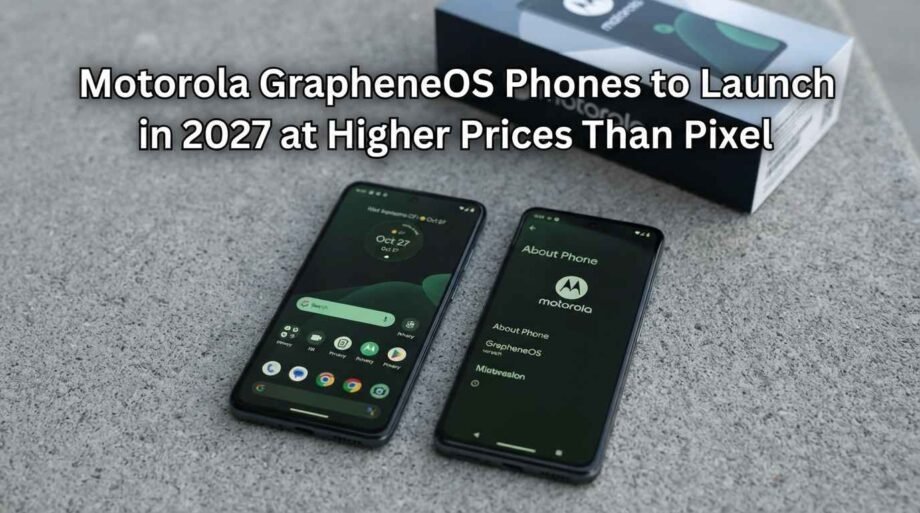
GrapheneOS is set to expand beyond Google Pixel phones, with Motorola preparing its first devices to support privacy-focused Android OS in 2027.
GrapheneOS has confirmed that its first Motorola devices will be flagship phones with higher-end hardware than current Pixel phones. As a result, these devices will also carry a higher price than comparable Pixel models.
Motorola GrapheneOS Phones Coming in 2027
Motorola and GrapheneOS started working together earlier this year to bring official GrapheneOS support to Motorola hardware. GrapheneOS has now shared more information about its first devices.
According to GrapheneOS, initial Motorola devices should become available in 2027. These phones will focus on flagship hardware because GrapheneOS has strict requirements for security, software support and hardware features.
Unlike Pixel phones, which come with Google software, upcoming Motorola phones are not expected to ship with GrapheneOS by default. Motorola hardware will receive support from GrapheneOS, allowing users to install and use OS on supported devices.
Higher Hardware and Higher Price
GrapheneOS says first Motorola phones will use higher-end hardware than Pixel phones. This also means users should expect a higher price.
GrapheneOS has pointed to Qualcomm flagship chip platforms as a key reason for this approach. Latest Snapdragon flagship platforms offer security features needed for GrapheneOS support.
Lower-cost Motorola phones are not expected to receive support soon. Qualcomm does not provide same level of software support and security features across all chip platforms.
Because of this, Motorola would need to provide longer software support for lower-end phones before they can meet GrapheneOS requirements.
Why Qualcomm Chips Matter
GrapheneOS currently supports Google Pixel phones because Pixel hardware provides security features needed by OS. Expansion to Motorola depends in part on progress from Qualcomm.
Latest Snapdragon flagship chips offer stronger security features and longer support options compared with many mid-range platforms.
GrapheneOS says lower-end devices will take more time to qualify. Motorola may also need to pay for longer software support on devices below flagship range.
This means Moto G and other lower-cost phones are unlikely to receive GrapheneOS support soon.
GrapheneOS Support Beyond Pixel
Google Pixel phones have been main hardware option for GrapheneOS until now. Motorola support will mark a major change for project.
GrapheneOS offers privacy and security features based on Android. Features include memory protection, network permission control, app sandboxing and a duress code that can erase phone data.
Motorola support will give users another hardware option while reducing dependence on Pixel phones.
Android Update Support
GrapheneOS also plans to make Android version updates easier on Motorola hardware.
Project plans to prepare releases before new Android versions launch. This could allow GrapheneOS releases to become available around same time as major Android updates.
GrapheneOS also plans to manage code and AOSP Git repositories needed for future Android releases.
Motorola Phones Could Be Premium Devices
GrapheneOS has not revealed exact Motorola phone models yet. However, flagship hardware and higher pricing suggest upcoming devices will target premium phone buyers.
Motorola could use its flagship Edge range or foldable phones for GrapheneOS support, but company has not confirmed specific models.
With flagship Snapdragon hardware and longer software support, prices could move above Pixel range.
When Will Motorola GrapheneOS Phones Launch?
GrapheneOS says initial Motorola devices should become available in 2027.
Motorola has not confirmed exact launch date or phone models. More information about hardware, price and availability is expected before launch.
For now, users interested in GrapheneOS will need to continue using supported Pixel phones until Motorola devices arrive.
Conclusion
Motorola will bring GrapheneOS support beyond Google Pixel phones in 2027. First Motorola devices will use flagship hardware, Qualcomm flagship Snapdragon chips and security features needed by GrapheneOS.
Higher hardware requirements will also mean higher prices. Lower-cost Motorola phones may receive support later if Motorola and Qualcomm provide longer software and security support.
Motorola’s entry into GrapheneOS could give privacy-focused users another phone option while opening a new hardware path for GrapheneOS beyond Pixel.
