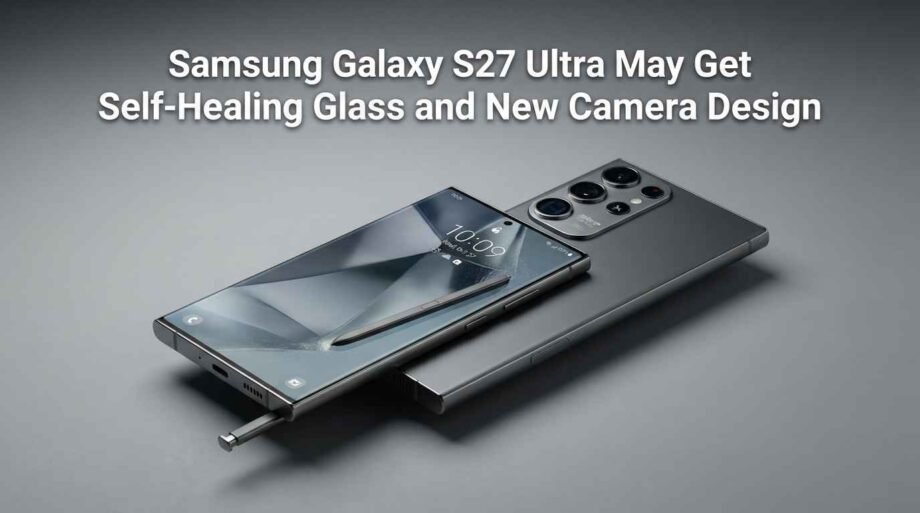
Samsung Galaxy S27 Ultra may bring a new approach to phone screen protection. Reports claim Samsung and Corning are working on a self-healing surface coating for a future version of Gorilla Armor. Galaxy S27 Ultra could become first Samsung phone to use this technology on a display if development reach a final product.
Samsung has not confirm this feature. Corning has also not announce a Galaxy S27 Ultra version of Gorilla Armor with self-healing technology. Current information come from leaks and industry observers, so buyers should treat all reported specifications as unconfirmed.
Galaxy S27 Ultra Self-Healing Glass
Industry observer Schrödinger claims Samsung and Corning are working on a new self-healing surface coating for a future Gorilla Armor version. Another tip from same source says new coating may focus on micro-scratches caused by normal phone use.
Current Gorilla Armor focus on scratch resistance and drop protection. A self-healing coating could take a different approach. Instead of only stopping scratches, surface material could recover from some small marks after damage.
Small scratches can come from keys, coins, dust, grit, fingernails, bags, and pockets. Over months of use, these marks can change how a phone screen look. A coating that can reduce visible micro-scratches could help a Galaxy S27 Ultra keep its original screen condition for longer.
However, reports do not confirm that self-healing coating will cover screen. Samsung could use coating on rear glass or another phone surface. More information from Samsung or Corning will need to confirm its exact location.
How Could Self-Healing Gorilla Armor Work?
Self-healing material use a surface layer that can respond after small damage. When a scratch affect surface layer, material could move, react, or restore its original structure.
Reports only point toward recovery from micro-scratches. Technology should not be viewed as protection against cracks, chips, deep gouges, or major impact damage.
A related materials research report describe a self-healing coating that reached 4H pencil hardness and recovered from scratches in about 10 seconds at room temperature. Report also mention more than 200,000 bending cycles at a 1.5mm radius. However, no evidence confirm that same material is part of Samsung and Corning development.
Because of this, Galaxy S27 Ultra users should not expect every type of screen damage to repair itself.
Gorilla Armor Already Has a Samsung Connection
Samsung and Corning already work together on Gorilla Armor for Galaxy Ultra phones. Galaxy S24 Ultra introduced original Gorilla Armor in 2024. Samsung said Corning testing showed more than four times scratch resistance compared with competing aluminosilicate cover glass and up to 75% lower reflection.
Galaxy S25 Ultra then use Gorilla Armor 2. Corning describes Gorilla Armor 2 as glass-ceramic cover material designed for scratch and drop resistance. Galaxy S26 Ultra also use Gorilla Armor 2.
This history makes a new Gorilla Armor version possible for Galaxy S27 Ultra. Samsung has already use Ultra models to introduce or promote Corning cover technology.
A self-healing version could extend this partnership into a new area of phone durability.
Could Galaxy S27 Ultra Remove Need for Screen Protector?
A self-healing display may reduce some reasons for using a screen protector, but current reports do not support removing screen protection completely.
A screen protector can help against drops, cracks, chips, deep scratches, and direct impact. Self-healing coating would mainly target minor surface marks based on current information.
Samsung and Corning would also need to explain how fast healing work, which scratches can recover, how many healing cycles surface can handle, and whether performance decrease after long use.
Until those details become known, users should still consider a screen protector if physical screen protection is important.
Galaxy S27 Ultra Camera Design May Change
Self-healing glass may not be only major change planned for Galaxy S27 Ultra. Leaks also point toward a camera redesign.
Samsung may move from its current vertical camera arrangement to a horizontal layout. Such a change could give Galaxy S27 Ultra a different rear design and change how camera hardware sit across back panel.
Another reported change involve telephoto hardware. Galaxy S27 Ultra may replace a 3x telephoto camera with a 5x telephoto sensor. Such a move could improve long-range photography while changing camera options available at lower zoom levels.
Some reports also claim Samsung may remove laser autofocus. This could become a trade-off if other camera upgrades arrive.
Samsung has not confirm any camera change, so final camera hardware may differ from current leaks.
Galaxy S27 Ultra May Get 5400mAh Battery
Battery capacity may also receive an increase. Current leaks point to a 5400mAh battery for Galaxy S27 Ultra.
For comparison, Galaxy S26 Ultra use a 5000mAh battery based on current confirmed specifications. A move to around 5400mAh would add 400mAh capacity.
Wireless charging may also receive an upgrade, while wired charging could remain at 60W. Samsung has not confirm charging specifications for Galaxy S27 Ultra.
Battery capacity alone cannot determine battery life. Processor power, display efficiency, software, network use, camera use, and panel technology all affect daily battery performance.
Galaxy S27 Ultra May Offer Different Size Options
Samsung may also explore more than one Ultra size.
One report claims Samsung could consider a smaller Ultra model. Current Ultra phones use a large body to fit large displays, battery capacity, camera hardware, and S Pen support.
A smaller Ultra could target users who want Ultra-level hardware without a large phone body. Such a move could give Samsung another option within its premium phone range.
However, no official information confirm a smaller Galaxy S27 Ultra.
Galaxy S27 Series Price and Display Leaks
Leaks also provide possible pricing and hardware details for other Galaxy S27 models.
| Model | Reported Starting Price | Reported Camera Setup | Reported Display |
|---|---|---|---|
| Galaxy S27 | $899 | 50MP + 12MP + 10MP | M14 |
| Galaxy S27 Plus | $1,099 | 50MP + 12MP + 10MP | M14 |
| Galaxy S27 Pro | $1,299 | 200MP + 50MP + 12MP | M16 |
| Galaxy S27 Ultra | $1,499 | 200MP + 50MP + 50MP | M16 E7 |
These figures come from leaks and should not be treated as official Samsung specifications.
Galaxy S27 Pro may receive a design change with a thinner body inspired by Samsung Edge models. Galaxy S27 Ultra may also follow part of this design direction with smaller changes.
Display technology could also change. Reports point toward M16 panels for Pro and Ultra models, while base Galaxy S27 and S27 Plus may use M14 panels.
M16 panels may offer higher brightness and improved power efficiency, but Samsung has not confirm panel specifications.
Galaxy S27 Ultra vs Galaxy S26 Ultra
| Specification | Galaxy S26 Ultra | Galaxy S27 Ultra Rumor |
|---|---|---|
| Battery | 5,000mAh | Around 5,400mAh |
| Wired charging | 60W | 60W expected |
| Telephoto | 10MP, 3x optical zoom | 5x sensor rumored |
| Rear camera layout | Vertical | Horizontal layout rumored |
| Screen protection | Gorilla Armor 2 | Self-healing Gorilla Armor rumored |
| Laser autofocus | Available | May be removed |
| Starting price | $1,299.99 | Around $1,499 rumored |
Galaxy S26 Ultra information in comparison come from confirmed product information, while Galaxy S27 Ultra details remain based on leaks.
Self-Healing Glass Could Improve Long-Term Phone Use
Samsung has increased software support for recent Galaxy phones. Starting with Galaxy S24 series, Samsung promise seven generations of operating system updates and seven years of security updates.
Long software support means users may keep phones for more years. Physical durability can become more important during a longer ownership period.
A self-healing surface could help reduce visible wear during that period. A phone that remain free from small surface marks could also have better resale appeal.
Self-healing technology could also reduce demand for some disposable screen protection products. However, actual environmental benefits would depend on how durable coating prove over years of use.
Self-Healing Phone Material Is Not New
Self-healing phone material has appeared before.
LG use a self-healing rear panel on G Flex 2. Earlier LG technology could recover from minor scratches after some time. That design used a rear surface rather than a modern glass display.
Other companies have also research self-healing coatings for cars and phone accessories.
Samsung and Corning could take a different approach by applying self-healing technology to a premium glass surface. If Galaxy S27 Ultra receive such a display coating, front-screen use could make technology more useful than earlier phone examples.
What Galaxy S27 Ultra Buyers Should Expect
Galaxy S27 Ultra may focus on durability, camera hardware, battery capacity, and display technology.
Self-healing Gorilla Armor could become main feature if Samsung and Corning complete development. A surface that recover from minor scratches could change how users think about phone durability.
Camera changes could also bring a new direction for Galaxy Ultra. A horizontal camera layout, 5x telephoto sensor, and possible removal of laser autofocus could change both design and camera behavior.
A 5400mAh battery could provide more capacity, while 60W wired charging may remain unchanged. A smaller Ultra option could also expand Samsung’s premium lineup.
Still, none of these Galaxy S27 Ultra changes are official. Samsung has not confirm self-healing glass, camera layout, battery capacity, display panel, pricing, or smaller Ultra model.
Galaxy S27 Ultra Launch Timing
Galaxy S27 Ultra is expected to arrive in early 2027 based on current reports. Samsung may reveal more information closer to launch.
Before an official announcement, specifications can change. Samsung and Corning may also decide not to bring self-healing coating to a final product.
For now, self-healing Gorilla Armor remains one of most notable Galaxy S27 Ultra rumors. If Samsung can bring a surface that recover from everyday micro-scratches while keeping normal glass strength and display clarity, Galaxy S27 Ultra could introduce a new direction for smartphone durability.
Final confirmation will depend on Samsung’s official launch information.
