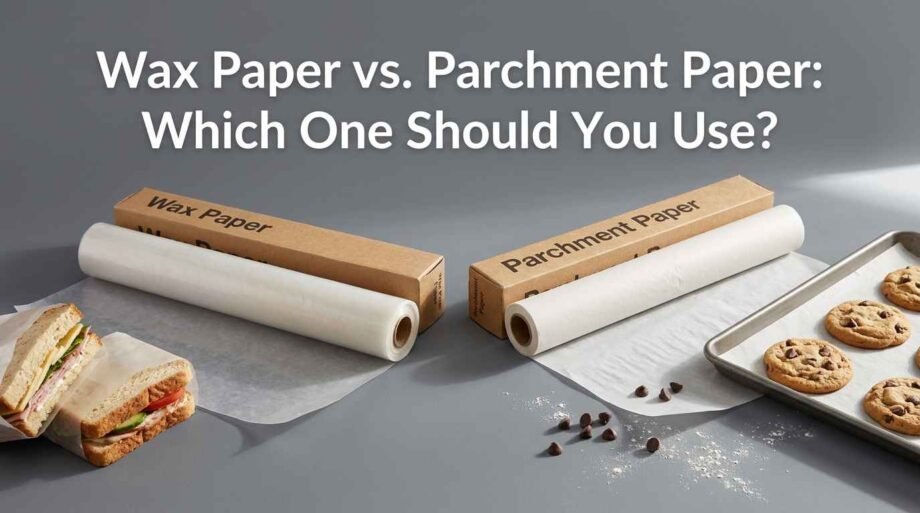
Wax Paper vs. Parchment Paper
Wax paper and parchment paper are two of the most commonly used food wrapping and kitchen papers, but they are often mistaken for one another. At first glance, they look similar because both are lightweight, flexible, and commonly found in kitchens, bakeries, and food service businesses. However, they are made with different coatings, have different performance characteristics, and are designed for different purposes.
Choosing the wrong paper can affect food quality, cooking results, and even safety. For example, using wax paper in the oven may cause the wax coating to melt, while using parchment paper for simple food wrapping may cost more than necessary. Understanding the differences between these materials helps you select the right paper for every task.
Whether you are preparing food at home, managing a bakery, operating a restaurant, or purchasing packaging materials for your business, knowing when to use wax paper and when to use parchment paper can improve efficiency and reduce waste.
What Is Wax Paper?
Wax paper is made by coating paper with a thin layer of food-grade wax. The coating creates a smooth, non-stick, grease-resistant, and moisture-resistant surface that is ideal for wrapping food, separating frozen items, and lining food baskets.
It is commonly used for:
- Sandwich wrapping
- Burger wrapping
- Bakery products
- Cheese packaging
- Chocolate wrapping
- Candy wrapping
- Food basket liners
- Short-term food storage
Wax paper performs best at room temperature or under refrigeration. It is designed for wrapping and protecting food rather than cooking at high temperatures.
What Is Parchment Paper?
Parchment paper is a specialty paper treated with silicone instead of wax. This silicone coating creates a non-stick surface while allowing the paper to withstand much higher temperatures than wax paper.
Because of its heat resistance, parchment paper is widely used for baking and roasting.
Common applications include:
- Baking cookies
- Roasting vegetables
- Baking cakes
- Lining cake pans
- Baking bread
- Cooking pastries
- Air fryer liners (when specifically designed for that use)
Unlike wax paper, parchment paper is intended for cooking in conventional ovens.
Key Differences Between Wax Paper and Parchment Paper
Although both products have similar appearances, their construction and intended uses are very different.
| Feature | Wax Paper | Parchment Paper |
| Coating | Food-grade wax | Silicone |
| Main Purpose | Wrapping and storage | Baking and cooking |
| Heat Resistance | Low | High |
| Oven Safe | No | Yes |
| Grease Resistance | Excellent | Excellent |
| Moisture Resistance | Good | Good |
| Non-Stick Surface | Yes | Yes |
| Freezer Use | Yes | Yes |
| Food Wrapping | Excellent | Good |
| Baking | Not recommended | Excellent |
| Cost | Generally lower | Usually higher |
The table highlights the biggest difference: wax paper is primarily a wrapping paper, while parchment paper is primarily a baking paper.
Material Composition
The performance of each paper begins with its coating.
Wax Paper
Wax paper consists of a paper base coated with food-grade wax. This wax creates a barrier that helps prevent grease and light moisture from soaking through the paper.
The coating also gives wax paper its smooth feel and flexibility.
Parchment Paper
Parchment paper uses a silicone coating rather than wax. Silicone provides excellent non-stick performance while remaining stable at baking temperatures.
This makes parchment paper a better choice whenever food will be exposed to prolonged heat.
Heat Resistance
Heat resistance is one of the most important differences between these materials.
Wax paper performs well during food preparation and storage, but it is not intended for high-temperature cooking. The wax coating can soften or melt when exposed to oven temperatures.
Parchment paper, on the other hand, is specifically manufactured to tolerate baking conditions. This allows it to line baking trays, cake pans, and cookie sheets without losing its non-stick properties.
Best Choice for High Heat
- Baking cookies
- Baking cakes
- Roasting vegetables
- Baking bread
- Roasting potatoes
Winner: Parchment Paper
Food Wrapping Performance
When wrapping food for storage, transportation, or serving, wax paper often provides a practical and economical solution.
Its grease-resistant coating helps protect foods such as:
- Burgers
- Sandwiches
- Pastries
- Cookies
- Brownies
- Cheese
- Chocolate
Parchment paper can also be used for wrapping food, but it is generally chosen when heat resistance is required rather than everyday wrapping.
Best Choice for Food Wrapping
Winner: Wax Paper
Grease Resistance
Both papers resist grease effectively, making them suitable for oily and buttery foods.
Wax paper is commonly used for burgers, pastries, fried foods, and sandwiches because the wax coating prevents oils from soaking through.
Parchment paper also performs well against grease, particularly when baking buttery doughs or roasting foods with natural oils.
Best Choice
Both products perform well, but wax paper is often preferred for everyday food wrapping because it combines grease resistance with lower cost.
Non-Stick Performance
One reason both products remain popular is their non-stick surface.
Wax paper prevents sticky foods such as chocolate, caramel, and cookie dough from adhering to the paper.
Parchment paper performs exceptionally well during baking because baked goods release easily after cooking.
Best Applications
Wax Paper
- Candy
- Chocolate
- Dough preparation
- Food wrapping
Parchment Paper
- Cookies
- Cakes
- Bread
- Pastries
Cost Comparison
For businesses that use large quantities of food wrapping paper, cost is an important consideration.
Wax paper is generally more economical for wrapping sandwiches, burgers, baked goods, and takeaway foods.
Parchment paper typically costs more because of its heat-resistant silicone coating.
If baking performance is not required, wax paper can provide better value for many food packaging applications.
Environmental Considerations
Both products are primarily paper-based, but their environmental impact depends on factors such as coatings, manufacturing methods, printing inks, and disposal practices.
Some manufacturers now offer:
- FSC-certified paper
- Compostable options
- Plastic-free products
- Responsibly sourced materials
Always review product specifications and local disposal guidelines when sustainability is a priority.
When Should You Choose Wax Paper?
Wax paper is the better choice when you need to:
- Wrap sandwiches
- Wrap burgers
- Package pastries
- Separate frozen foods
- Wrap cheese
- Line food baskets
- Present takeaway meals
- Print custom branding on food wrappers
When Should You Choose Parchment Paper?
Parchment paper is the better choice when you need to:
- Bake cookies
- Roast vegetables
- Bake cakes
- Line baking trays
- Bake bread
- Cook pastries
- Prevent baked goods from sticking
Common Misconceptions
Myth: Wax paper and parchment paper are the same.
Fact: They may look similar, but they use different coatings and are designed for different purposes.
Myth: Wax paper can replace parchment paper in the oven.
Fact: Wax paper is not intended for oven baking. For baking tasks, parchment paper is generally the appropriate choice.
Myth: Parchment paper is always better.
Fact: Not necessarily. For wrapping sandwiches, burgers, pastries, and other ready-to-eat foods, wax paper is often the more practical and cost-effective option.
Which One Is Better?
Neither paper is universally better—the right choice depends on the task.
Choose wax paper when your priority is wrapping, protecting, or presenting food. Its grease resistance, non-stick surface, and affordability make it an excellent option for restaurants, bakeries, cafés, and home kitchens.
Choose parchment paper when your priority is baking or cooking at elevated temperatures. Its silicone coating and heat resistance make it the preferred choice for oven-based applications.
Quick Comparison Summary
| If You Want To… | Choose |
| Wrap sandwiches | Wax Paper |
| Wrap burgers | Wax Paper |
| Package pastries | Wax Paper |
| Separate frozen foods | Wax Paper |
| Bake cookies | Parchment Paper |
| Bake cakes | Parchment Paper |
| Roast vegetables | Parchment Paper |
| Line baking trays | Parchment Paper |
| Reduce packaging costs | Wax Paper |
| Handle high heat | Parchment Paper |
Final Thoughts
Wax paper and parchment paper each serve an important role in food preparation and packaging. While they may appear similar, their coatings and intended uses make them suitable for different tasks. Wax paper excels at wrapping, storing, and presenting food, while parchment paper is the preferred choice for baking and other high-temperature cooking applications.
Understanding these differences allows home cooks, food service professionals, and packaging buyers to choose the right material for every situation, helping improve food quality, efficiency, and overall results.
